Paws-itive news! Snow leopard twins born at Highland Wildlife Park
Posted 18 Jun 2026 in Highland Wildlife Park
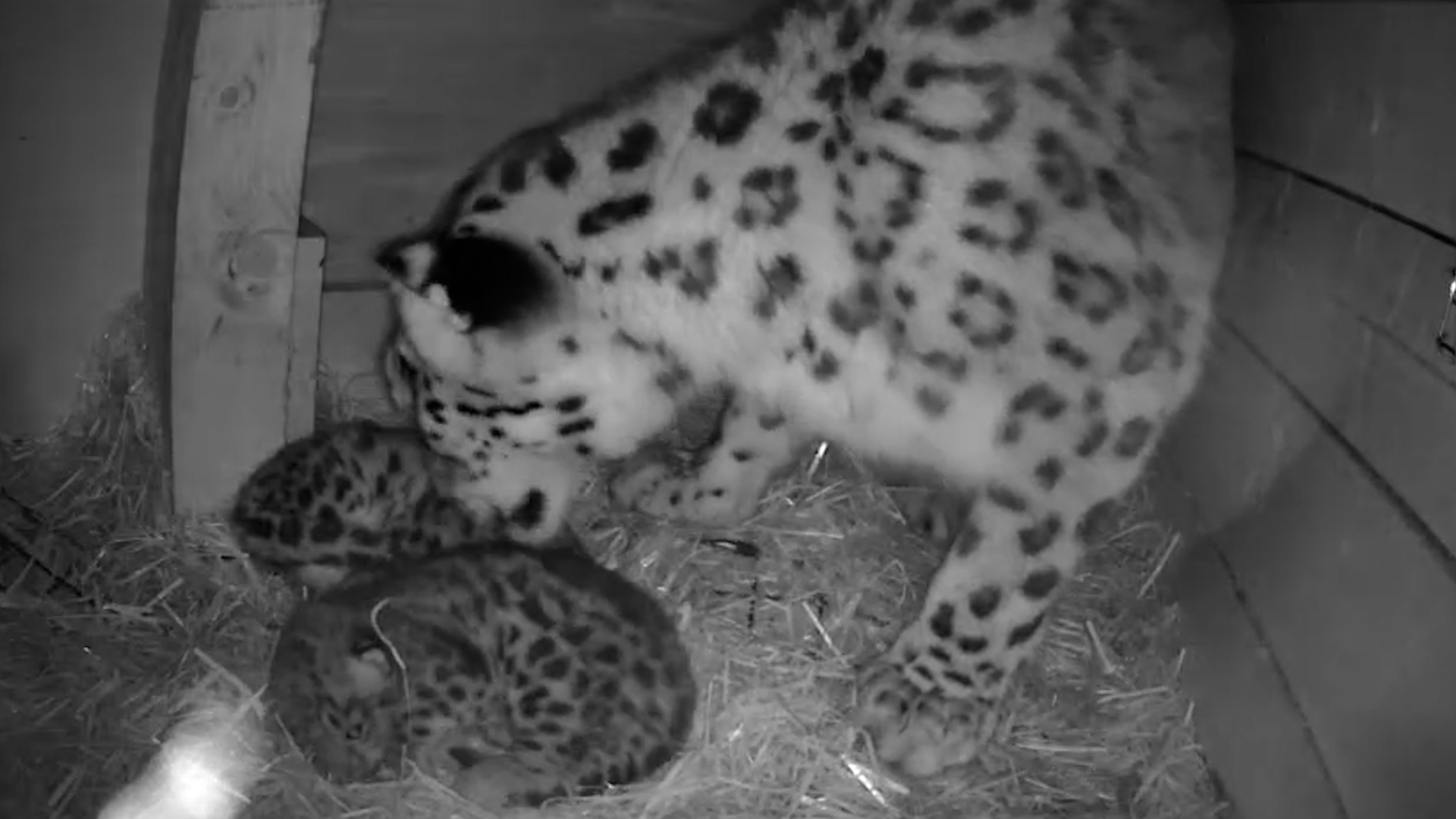
The Royal Zoological Society of Scotland’s (RZSS) Highland Wildlife Park has announced the much-anticipated arrival of two rare snow leopard cubs, the first litter for the park in four years. The twins were born on Monday 25 May to first-time mum Pari and dad Koshi.
The wildlife conservation charity shared footage from inside the snow leopard’s den, where Pari can be seen nursing the adorable litter. They will remain in the den for a few weeks before starting to appear at den’s entrance, where they will continue to live and learn alongside their mother for up to two years.
Lucy Petrie, animal care manager at Highland Wildlife Park, said: “After months of carefully introducing Koshi and Pari and giving nature the opportunity to take its course, we're delighted to see that patience pay off. We are really looking forward to our visitors meeting them as they grow and take their first steps outside of the den in the next few weeks.”
Snow leopard cubs are born blind and typically do not open their eyes until about a week after birth. For the first two months they rely entirely on their mother’s milk, only beginning to eat meat as they grow stronger and more developed.
“Pari is a first-time mum, so we are keeping a close eye on how she is coping. Her instincts have kicked in and she is doing a wonderful job of raising the cubs,” said Lucy Petrie.
Snow leopards are solitary by nature with mothers taking sole responsibility for raising offspring. To mimic this natural behaviour, keepers have dad Koshi living separately from Pari and the litter until they reach an age where they’ll be ready to meet dad.
The sex of the new arrivals is not yet known and will be confirmed by the charity’s vets during their first health check.
Lucy Petrie added: “While the cuteness is an excellent reason to be excited, it's even better for the snow leopard population, which is decreasing in the wild. These new faces are going to be great ambassadors for their wild relatives, helping raise awareness of the challenges this beautiful and enigmatic species face every day.”