From Highland Wildlife Park to Ugandan national parks
Posted 24 Apr 2026 in Highland Wildlife Park
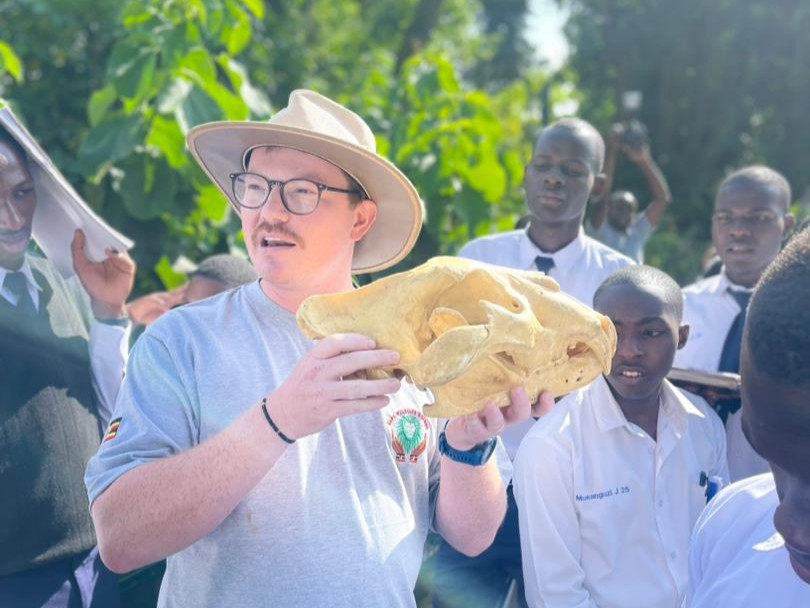
In March I had the privilege of visiting the Ugandan Wildlife Conservation Education Centre (UWEC) as part of the International Zoo Educators Job Exchange Programme. For two weeks we shared knowledge and experiences to better understand how conservation education goals can be achieved. It was an honour to represent Highland Wildlife Park and explore what differences and similarities there are between Uganda and Scotland.
As part of my trip I visited five national parks to immerse myself in the savannahs, forests and wetlands which give Uganda it’s nickname, ‘The Pearl of Africa'. I walked through forests with chimps and gorillas, bashed through the bush with rhinos, shared the savannah with lions and elephants and even slept to the sound of whooping hyenas.
While the wildlife was spectacular, what I found most valuable was meeting with different communities to hear of the love they have for their country’s stunning biodiversity but also the challenges they face living alongside such powerful animals.
Recently UWEC and the National Botanical Gardens have become a branch of the Ugandan Wildlife Authority, which handles all National Park matters and issues of human-wildlife coexistence. As they are all now one governmental department, I was able to spend time with a variety of teams and witness how they interconnect and cooperate to support people and wildlife across the nation.
Zoo educators, community workers, park rangers, animal keepers, veterinarians, human-wildlife conflict officers, botanists and even sniffer-dog trainers were all working together under one banner to achieve a unified goal - to protect and restore wildlife in Uganda while supporting local communities.
Most of my time was spent with the education team at UWEC, who are a very dedicated bunch indeed. As Uganda’s central wildlife education centre they are responsible for teaching the nation’s schools, whether through visits to the centre or through outreach programmes, about local and global matters of wildlife and conservation.
Perhaps surprisingly, Scotland and Uganda are facing many of the same conservation challenges. Wildlife and natural habitats are in rapid decline and in most cases human activity is responsible. So, the job of a conservation educator is the same wherever you go - to raise awareness for wildlife issues, instil a love and stewardship of the natural world and facilitate behaviour changes which support the planet’s ecosystems.
What is different is the way those issues manifest and the cultural attitudes around them. For example, here in Scotland we love our owls, the sight of a short-eared owl hunting over the moorland, or a ghostly barn-owl against the twilight sky is a special
visit which we cherish. In Uganda attitudes towards owls are negative, they are seen as a bad omen and are therefore unloved or persecuted outright.
One of UWEC’s missions is to transform this attitude by developing a bird flight display, which I was honoured to be asked to help with and teach the public and students that there is nothing to fear from a visit from an owl. While superstition is less of barrier in Scotland, there are many parallels to be drawn from this and conversations about the value of animals like beavers, leeches and badgers are still very much a part of Scottish conservation.
After a month working with UWEC I have brought back to Scotland a much deeper understanding of global conservation issues and new ways to engage with visitors at the park. And although the Highland locals are not facing crop raids from elephants or livestock predation from leopards, we have much in common with Ugandans. A shared responsibility to revitalise the health of our natural landscapes and develop coexistence strategies to empower communities to protect, value and love nature.
Stuart Owen
Discovery ranger team leader